on
I use my smartphone like the landline
When I was a kid, we had a rotary phone. It was great because you used it only when you needed it. When someone called you, you heard the ring, went to the hallway, picked up the receiver, talked, hung up, and went back to your life. When you needed to call someone, you went to the hallway, picked up the receiver, dialed the number from memory, talked, and hung up. You did all of this while standing up, so you had to keep your conversations brief and to the point.
“What if you could do that with a smartphone?” I thought to myself, looking at my screen time statistics. The report said I averaged more than four hours a day. Most of that time was split between Instagram, TikTok and Telegram.
So I set out to do an experiment. Here are the three simple rules:
- Allow only time-sensitive notifications like phone calls and messages from close people. Mute everything else. Set the phone to ring mode with max volume, so you can hear it from anywhere in your house.
- The phone stays in the hallway. You cannot take it to any other room, except to charge it overnight in the kitchen, rather than on the bedside table.
- You can use any apps however much you want but you must use them standing up in the hallway.
The habit of reaching for my phone during any downtime was deeply ingrained. And in the first few days, I kept reaching for my phone that wasn’t there. I remembered it was in the hallway. I looked back to my laptop, refreshed HackerNews almost as if trying to emulate that slot machine experience when scrolling in an app.
Whenever I passed my phone in the hallway, I never missed out on the opportunity to check on my Instagram ads with my friends’ stories mixed in. Somehow, without my noticing it, I was already watching a reel about house renovation. But standing wasn’t comfortable, so I decided those reels were not worth standing up for, and proceeded to the bathroom. Thus, whenever I opened those time-wasting apps, my legs reminded me that this sort of entertainment is not interesting enough to justify standing in the hallway like an idiot. In the first week, I cut my screen time from 4 to 1.5 hours.
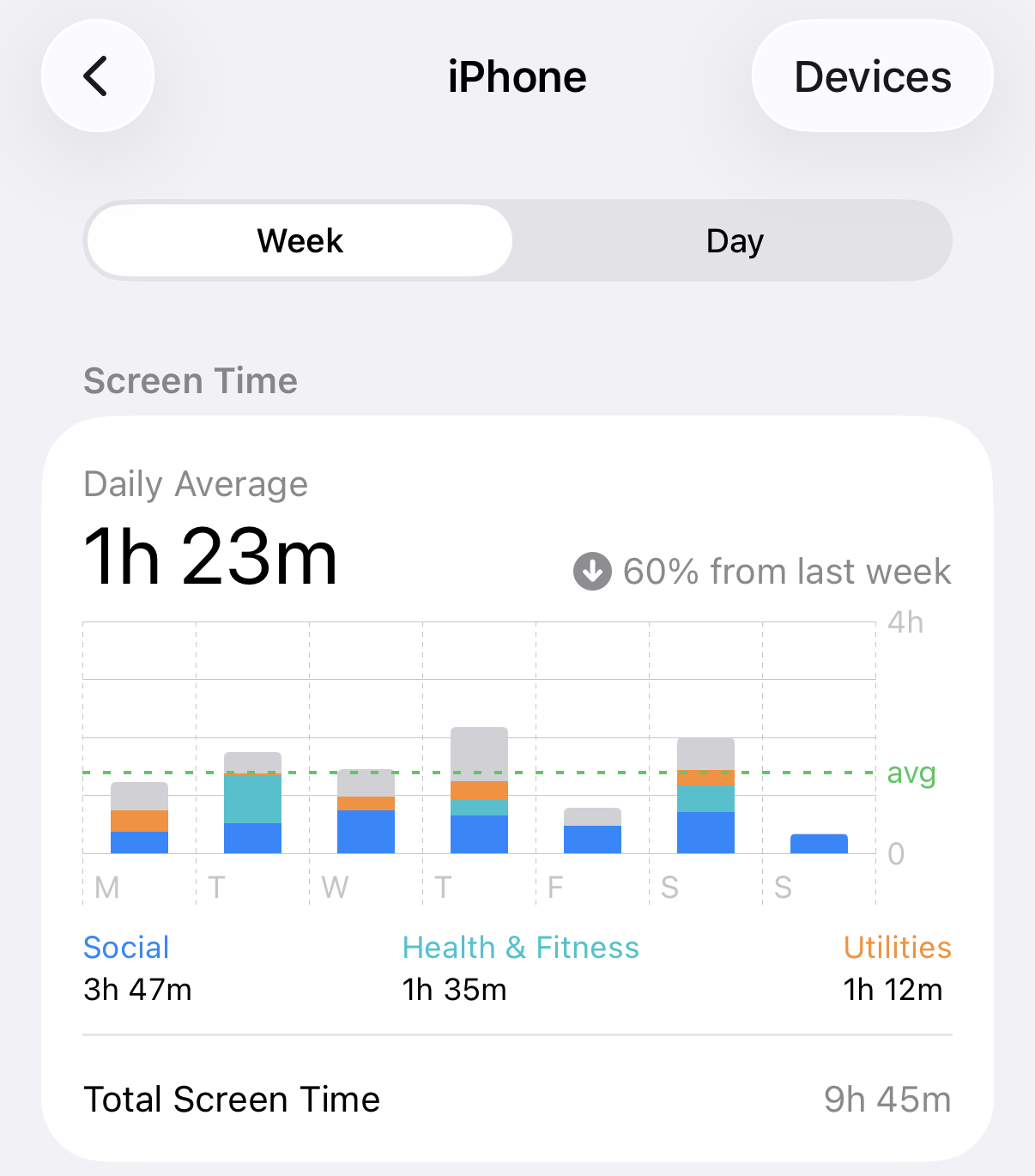
During the second week, something changed. I kept forgetting to check the phone whenever I was passing it. It felt like the smartphone was becoming a tool again, not an appendage of my body. The urge to reach for the phone faded away. Now my downtime was just that, a little pause that I didn’t feel like filling with anything. I embraced boredom with relief, and doing nothing felt like rest. If I became too bored, I found other ways to spend my time. I played with my cat. I unloaded the dishwasher. I did some minor repairs around the house.
After a few weeks, this practice slowly shifted my perception. I realized there is nothing on my phone worth staring at for 4 hours every day, a quarter of my waking life. FOMO is not real because there is nothing to miss out on, only noise and distraction. The so-called educational content on social media that many of us justify scrolling for is just random factoids that we forget immediately and extract no real value from.
There is no Instagram reel or TikTok video worth wasting all that time on. There is no life-changing X thread or Reddit post. And if there is, someone will send it to me, but I won’t have wasted a quarter of my life looking for it. Life changes through self-reflection, which is not possible when I am numbing myself with “content”.